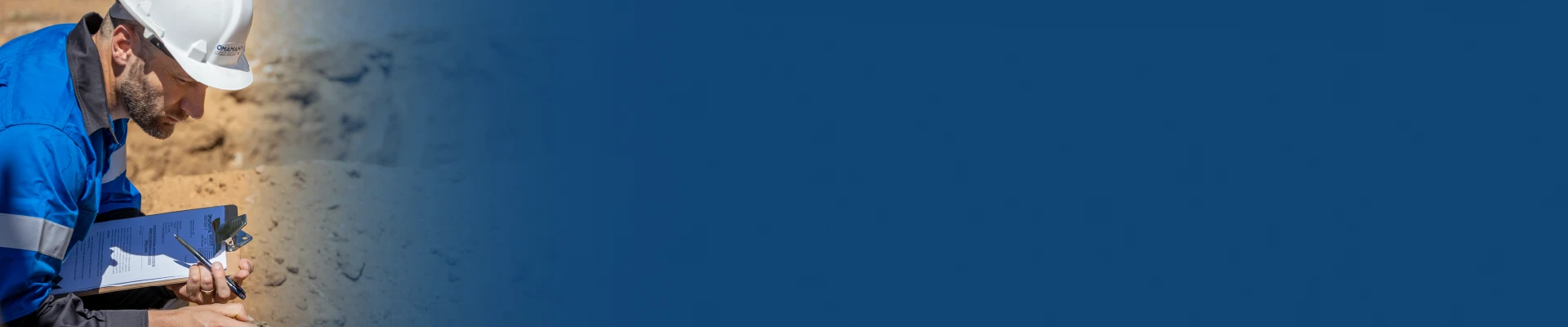
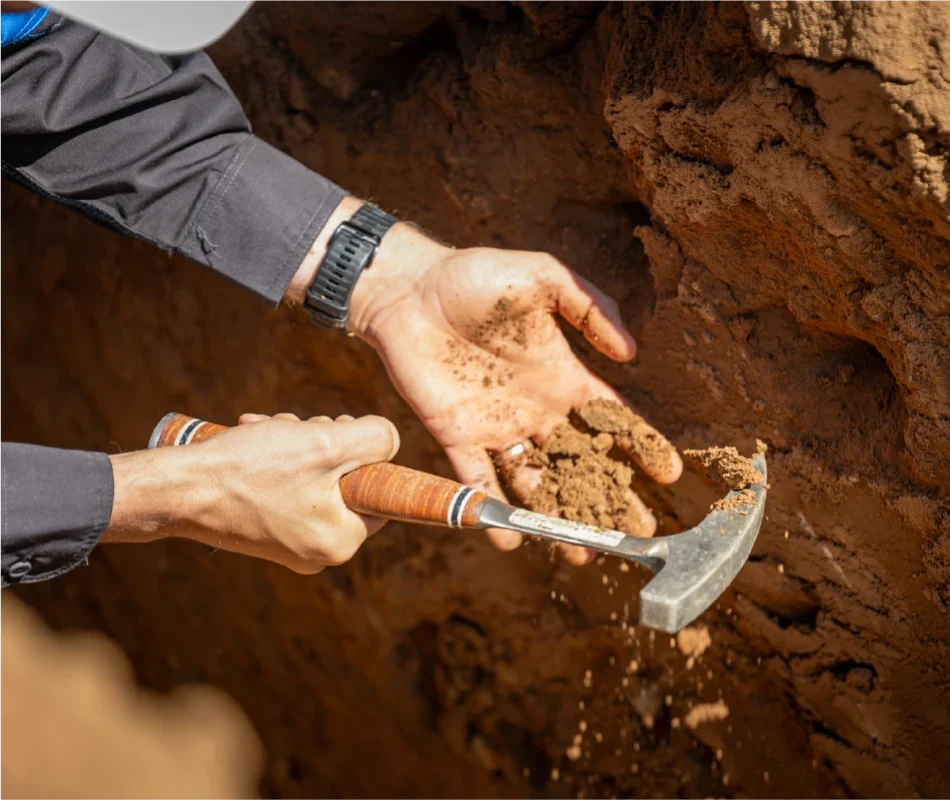
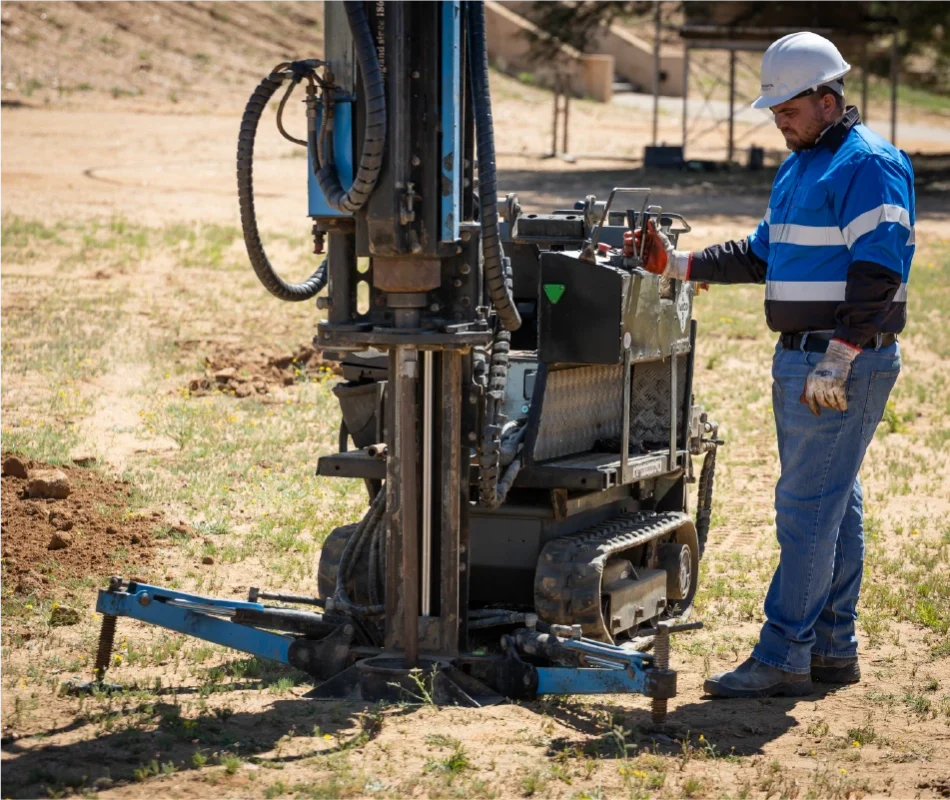
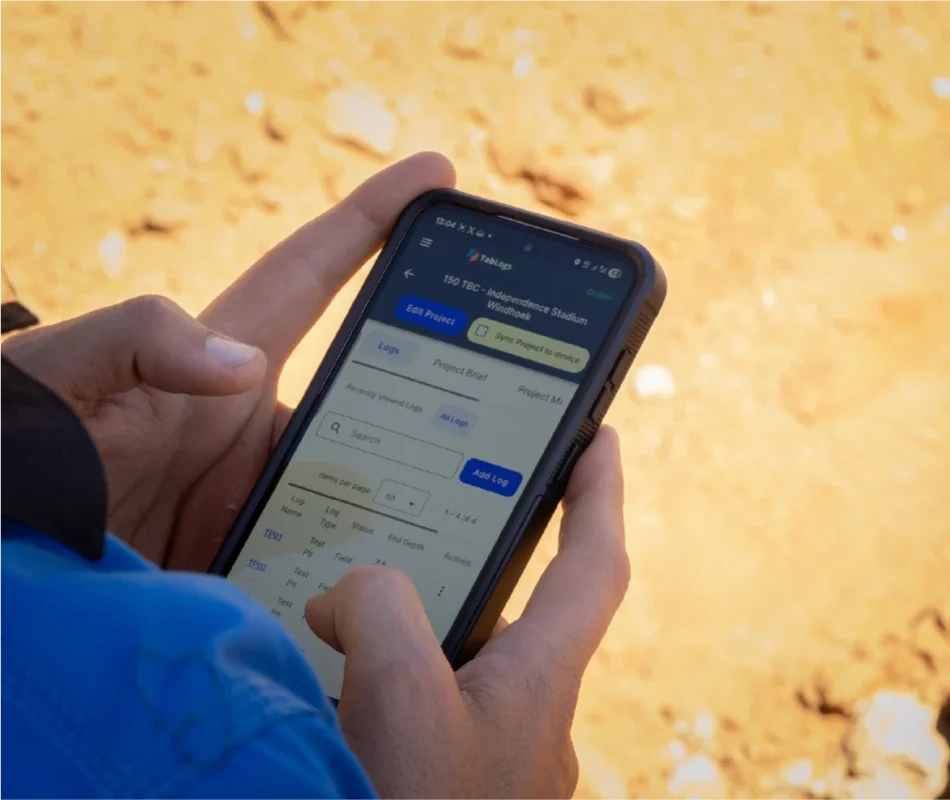
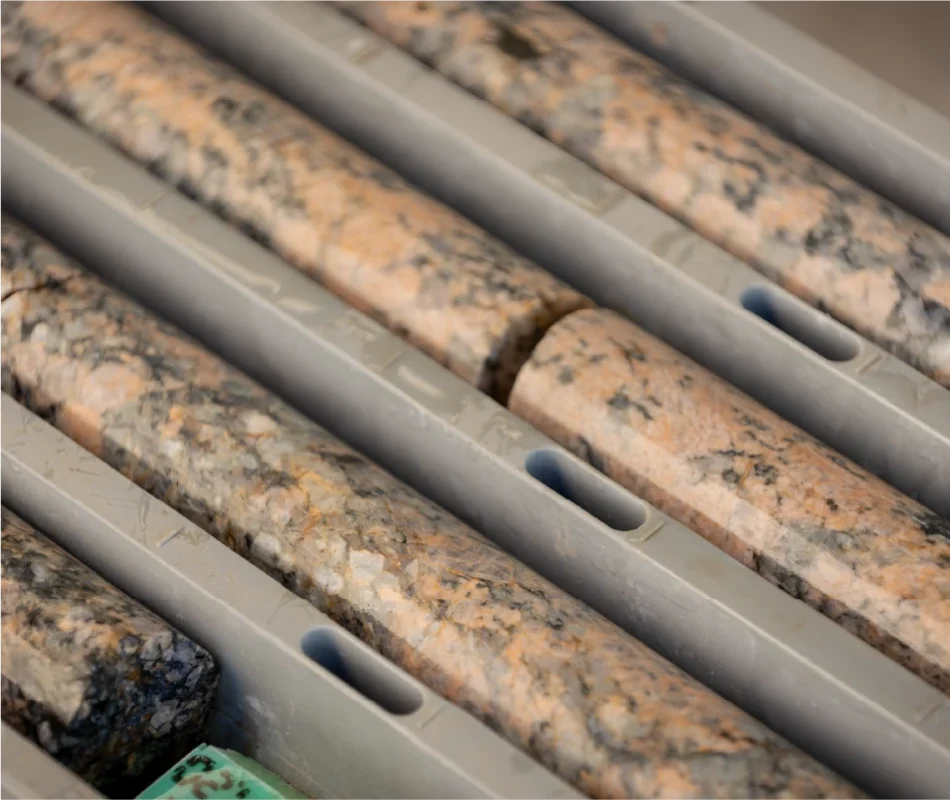
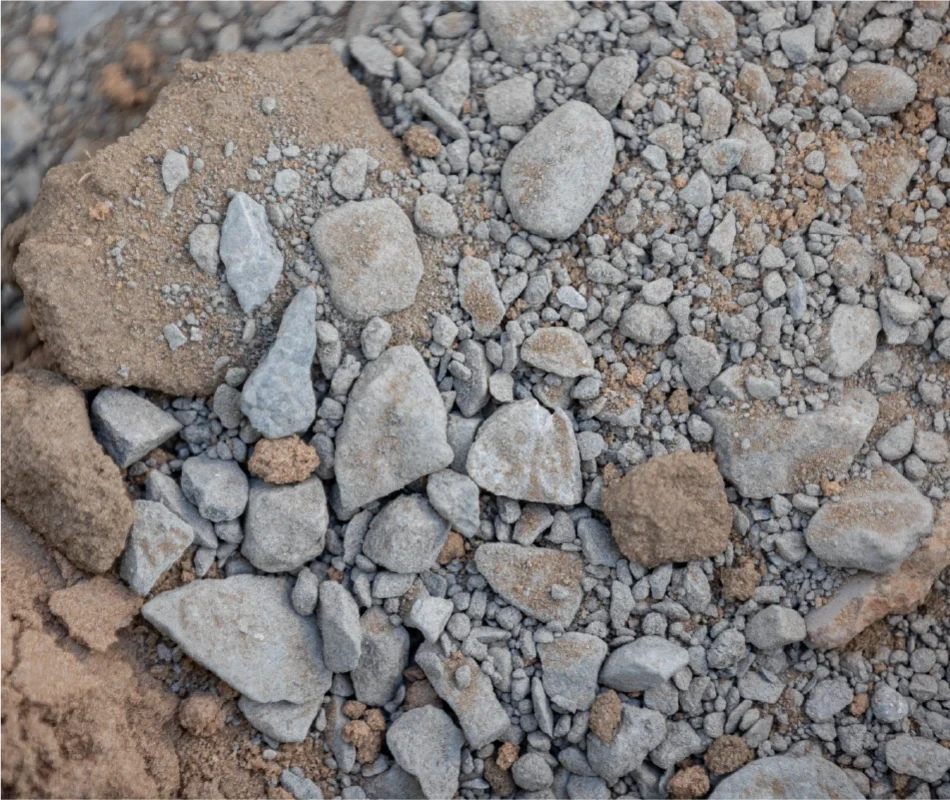
We conduct comprehensive subsurface geotechnical investigations to characterise soil and rock conditions for engineering design and construction. Our services include test pit investigations, rotary core drilling, detailed geotechnical logging, and the preparation of fully interpretive geotechnical investigation reports. Every investigation is tailored to the project risk level and site conditions, with findings reported in accordance with recognised standards.
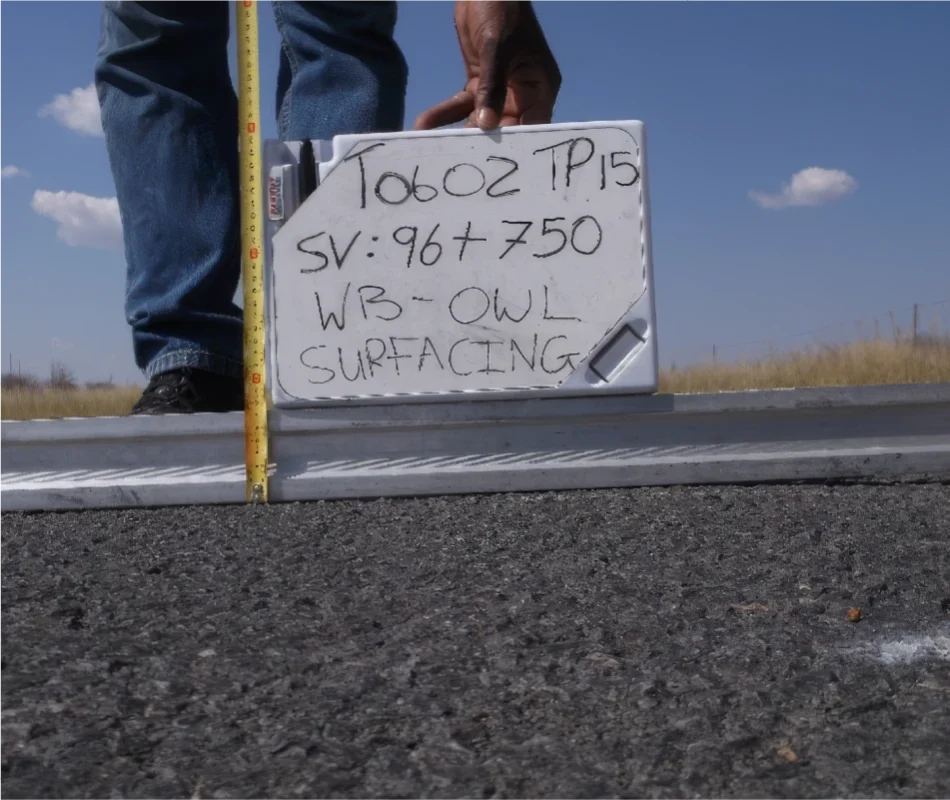
Our road and pavement investigation services provide the subsurface and materials data needed for the design, rehabilitation, and maintenance of roads and pavements. We conduct systematic road prism investigations combining centreline test pits, in-situ testing, and disturbed and undisturbed sampling, enabling accurate subgrade characterisation and pavement layer analysis. Our reports support road design engineers with reliable data for both new construction and existing pavement assessments.
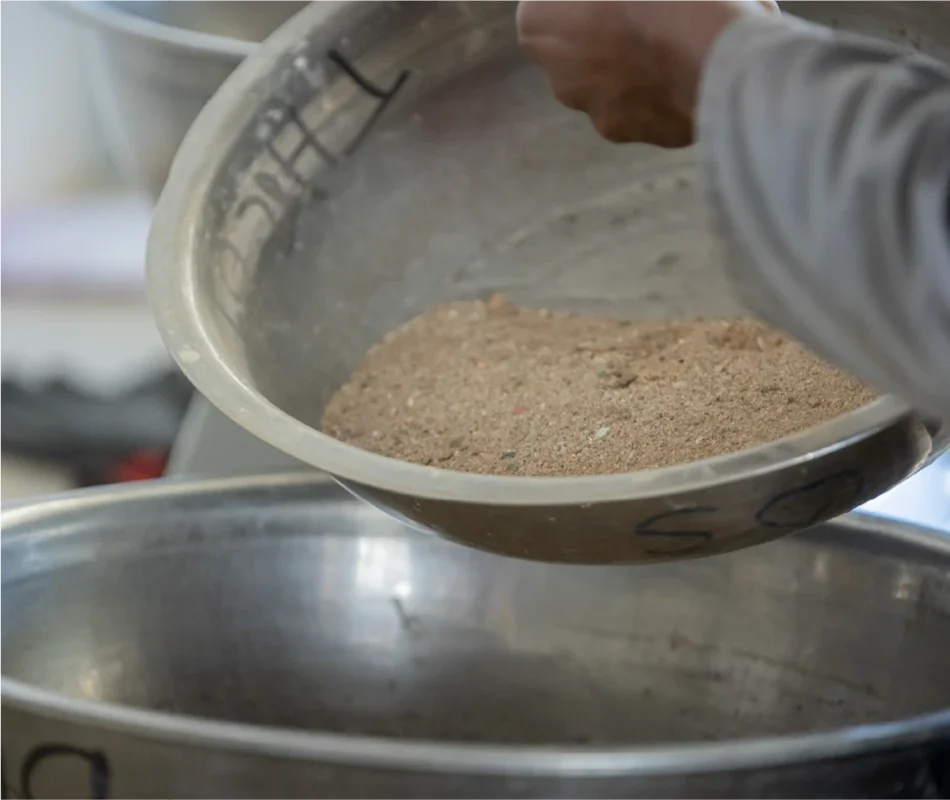
Our accredited materials testing laboratory provides a full suite of soil and aggregate testing in support of civil engineering construction. Testing includes grading analyses, Atterberg limits, compaction (modified and standard Proctor), California Bearing Ratio (CBR), and field density testing. All testing is performed under our ISO/IEC 17025 SADCAS accreditation, ensuring results that meet the most rigorous quality and traceability requirements.
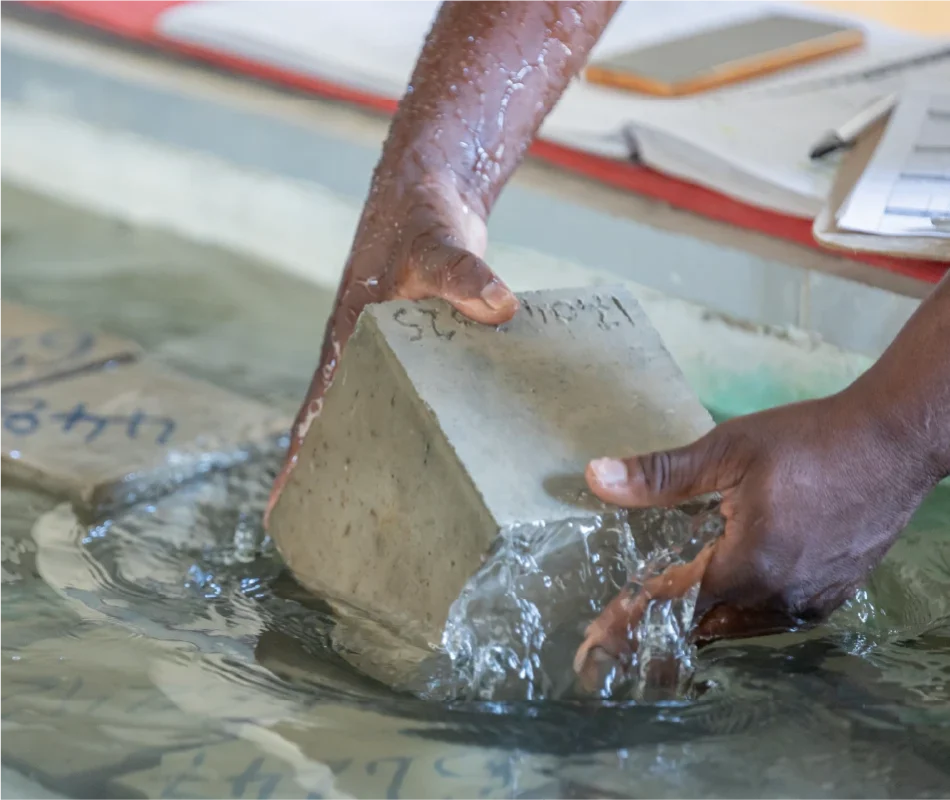
We offer a comprehensive concrete testing service covering both fresh and hardened concrete. Services include concrete mix designs, slump, flow, and workability testing of fresh concrete, as well as the preparation, curing, and compressive strength testing of concrete cubes and cylinders. Our testing supports quality control on construction sites and provides independent verification of concrete compliance with project specifications and relevant standards.
The Dynamic Probe Super Heavy (DPSH) is a rapid, cost-effective in-situ penetration test used to assess the relative density and consistency of soils with depth. We operate DPSH equipment capable of reaching significant depths, providing continuous blow-count profiles that are correlated to bearing capacity and compressibility parameters. DPSH testing is particularly valuable for preliminary site assessments, foundation design support, and filling the gaps between boreholes and trial pits.
Continuous Surface Wave (CSW) testing is a non-invasive geophysical technique used to determine the shear wave velocity profile and dynamic stiffness of the ground. By analysing the propagation of Rayleigh waves, we are able to derive shear modulus profiles and identify subsurface layering without the need for intrusive investigation. CSW testing is well-suited to pavement assessments, dynamic foundation design, and site investigations where minimal ground disturbance is required.
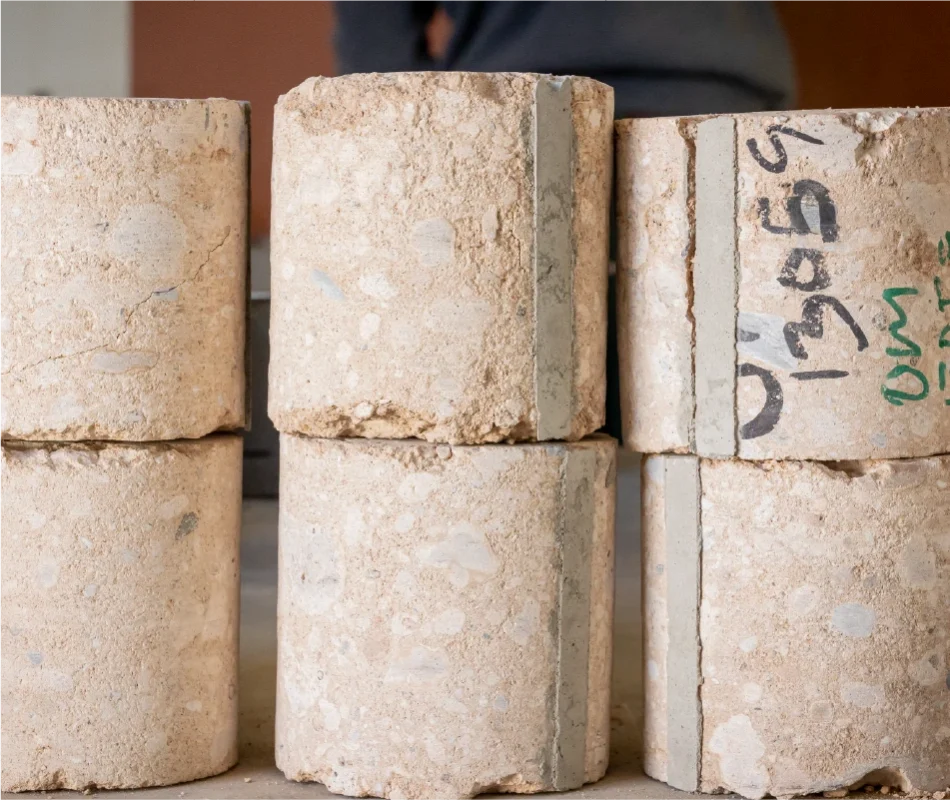
Our rock testing services support geotechnical and mining engineering projects requiring the characterisation of intact rock and rock mass properties. Laboratory testing includes Uniaxial Compressive Strength (UCS) and point load index. Field and laboratory results are integrated with core logging data to provide a complete picture of rock quality, intact strength, and mass behaviour for foundation, tunnel, slope, and excavation design.
Omamanya operates fully equipped mobile site laboratories that can be deployed directly to construction sites, remote project locations, and linear infrastructure corridors across Namibia. Our site laboratories bring materials testing capability to the point of work, enabling real-time quality control and rapid turnaround of results without the delays associated with transporting samples to a fixed facility, while lowering the cost of testing. Typical site laboratory services include field density testing, compaction control, grading analyses, Atterberg limits, CBR testing, and concrete cube preparation and curing. Mobile site laboratories are available on short-term and long-term deployment contracts, and can be scaled to suit the testing volumes and duration requirements of each project.

Plate load testing provides a direct, in-situ measurement of the bearing capacity and settlement characteristics of foundation soils and compacted fill layers. A rigid steel plate is loaded incrementally at formation level and the resulting settlement is recorded, allowing the derivation of the modulus of subgrade reaction and ultimate bearing capacity for foundation design. Plate load testing is widely used in the verification of compacted earthworks, the design of shallow foundations, and the assessment of pavement subgrade performance. Our team conducts plate load tests in trial pits, at the base of boreholes, or at surface level, and results are reported in accordance with DIN 18134 or BS 1377, as specified by the client or design engineer.